Good Morning in Czech: Dobré Ráno and When to Switch to Dobrý Den
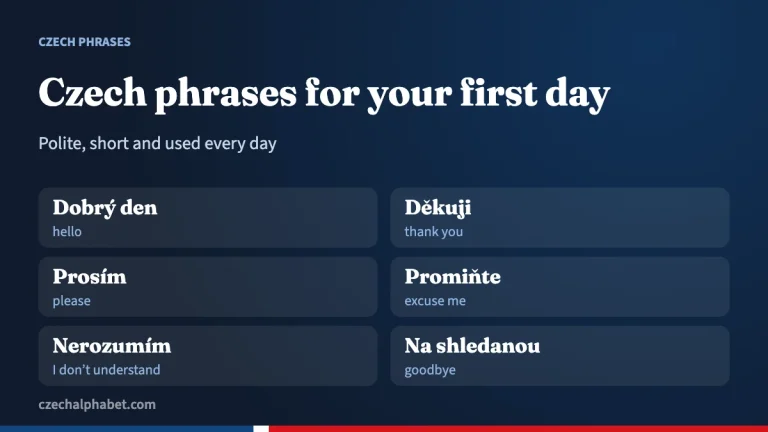
Good morning in Czech is dobré ráno (DOH-breh RAH-noh). Use it early in the day, roughly until 10 a.m. After that Czechs switch to dobrý den , which works for the rest of the day. With friends, a simple ahoj is enough at any hour.
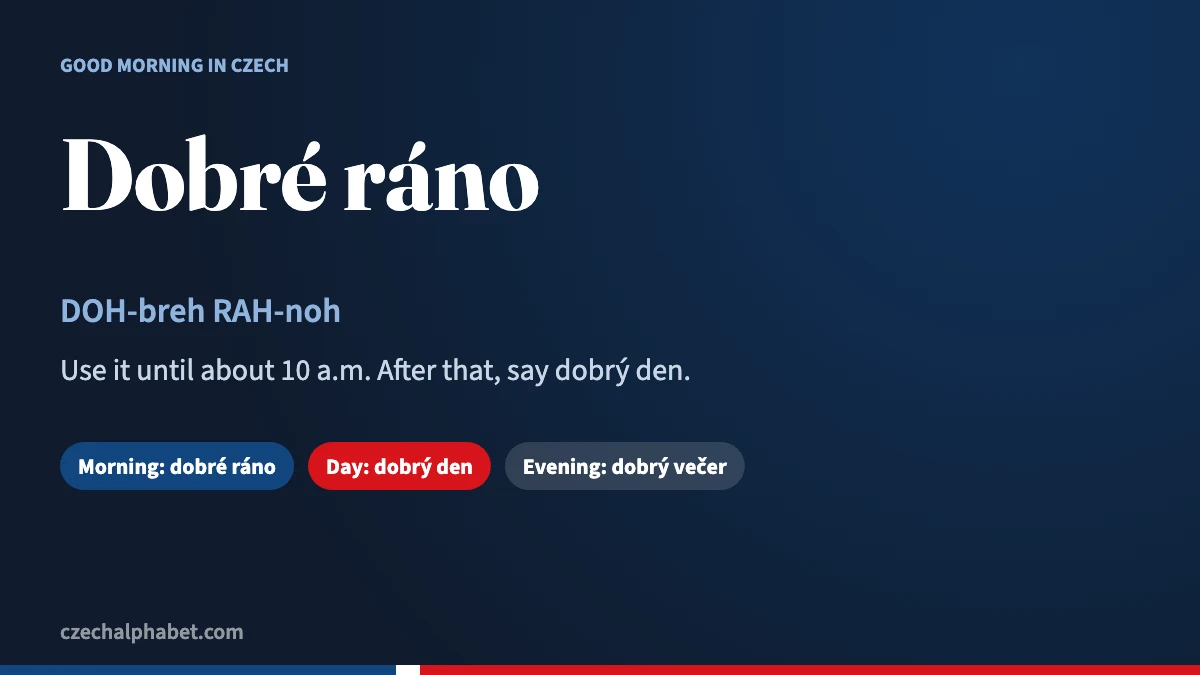
When to stop saying dobré ráno
English speakers say “good morning” until noon. Czech is stricter. Radio Prague’s language series describes dobré ráno as usable only until about 10 a.m., with dobrý den as the general daytime greeting from then on. In practice:
| Time | Greeting | Notes |
|---|---|---|
| Waking up to about 9–10 a.m. | Dobré ráno | Family breakfast, first colleague you meet |
| Mid-morning to evening | Dobrý den | Shops, offices, strangers; also fine at 8 a.m. in a shop |
| Evening | Dobrý večer | From dusk, or after about 6 p.m. |
| Leaving late or going to bed | Dobrou noc | Farewell only, never a greeting |
A useful habit: in shops and offices, dobrý den is safe even at 8 a.m. Dobré ráno is warmer and more personal, so it fits home, a regular café, or the colleague at the next desk.
Why it’s dobré ráno, not dobrý ráno
Ráno (morning) is a neuter noun, so the adjective “good” takes its neuter ending -é. Den (day) is masculine, so it is dobrý den. Noc (night) is feminine, and in the farewell it is in the accusative case: dobrou noc. You don’t need the grammar to use these, but it explains why the three phrases look different.
Saying it naturally
- Stress the first syllable of each word: DOB-ré RÁ-no.
- Both long vowels matter: é is a long “eh”, á is a long “ah”.
- The r is tapped, a single flick of the tongue, not the English r.
Good morning with a little extra
- Dobré ráno, jak ses vyspal? / vyspala?: Good morning, how did you sleep? (to a man / to a woman)
- Krásné ráno!: Beautiful morning!
- Dobré ráno, zlato.: Good morning, darling.
- Hezký den!: Have a nice day! Said when leaving, not as a greeting.
Common mistakes
- Dobré ráno at 11 a.m. in a shop. Not wrong, but dobrý den sounds more natural by then.
- “Dobry rano”. Two errors: wrong ending and missing accents. It is dobré ráno.
- Using hezký den as a greeting. It means “have a nice day” and belongs at the end of a conversation.
Frequently asked questions
How do you say good morning in Czech informally?
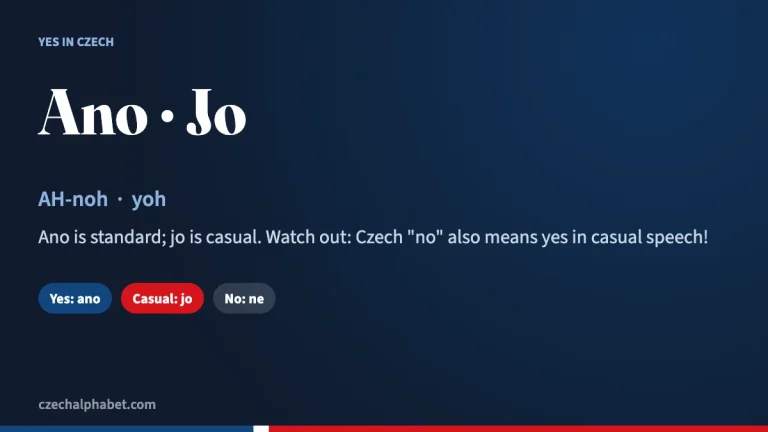
Dobré ráno works in both registers. Friends also just say ahoj or čau in the morning.
What does dobré ráno mean literally?
“Good morning”: dobré is “good” and ráno is “morning”.
How do you reply to dobré ráno?
Say dobré ráno back. Among friends, ahoj is also fine.
Keep going
- Hello in Czech: dobrý den vs ahoj
- Good night in Czech
- How are you in Czech
Sources
- Radio Prague International, Czech greetings through the day: english.radio.cz