Hello in Czech: Dobrý Den, Ahoj and Which One to Use
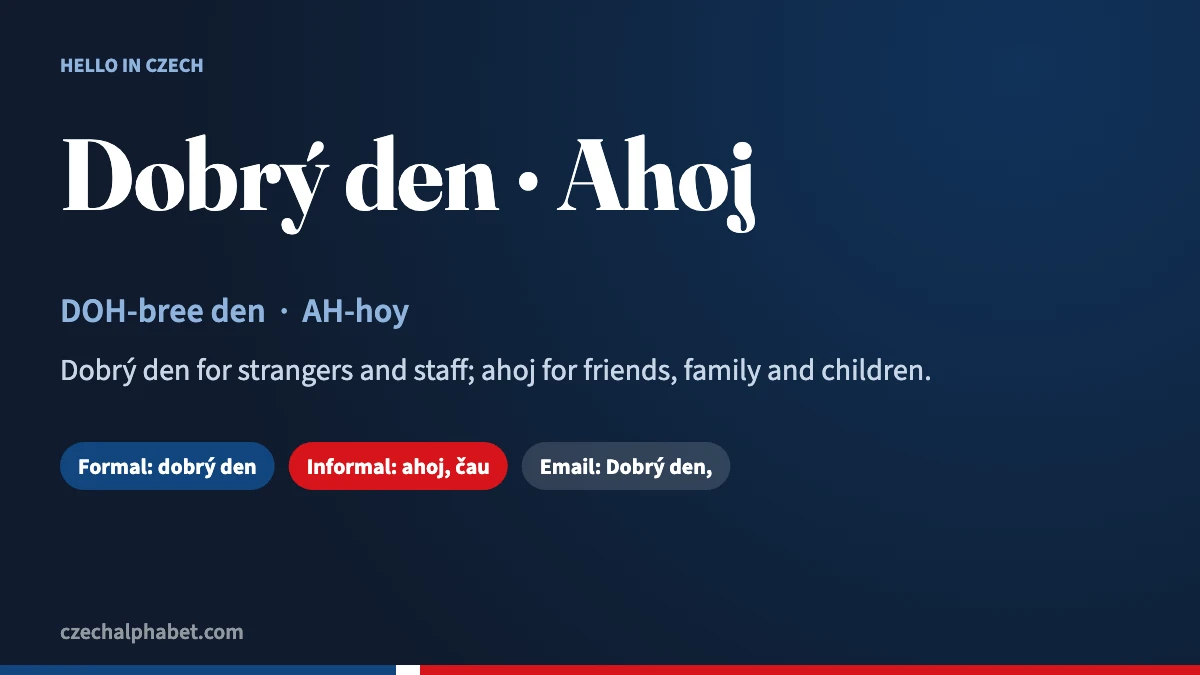
Hello in Czech is dobrý den (DOH-bree den, “good day”) when you speak to strangers, staff or anyone you would call vy, and ahoj (AH-hoy) with friends, family and children. Ahoj also means goodbye. If you are unsure, say dobrý den: nobody minds being greeted too politely.
Pick the right hello in five seconds
Czech splits greetings by relationship, not by mood. Ask yourself one question: would I use first names with this person? If not, you are in vy territory and need a formal greeting.
| Situation | Say | Why |
|---|---|---|
| Shop, café, pharmacy, hotel desk | Dobrý den | Expected on entering; staff greet you the same way |
| Neighbour on the stairs, older person | Dobrý den | Ahoj here sounds overfamiliar |
| Friends, classmates, children | Ahoj or Čau | Both work for hello and bye |
| Colleague you are on first names with | Ahoj, Zdravím | Zdravím is the safe in-between |
| Work email to someone you don’t know | Dobrý den, | The standard opening line of most Czech emails |
| Answering the phone | Haló or Prosím | Prosím here means “yes, speaking” |
Formal greetings by time of day
Dobrý den covers most of the day, so you can get by on it alone. The others are nice to have.
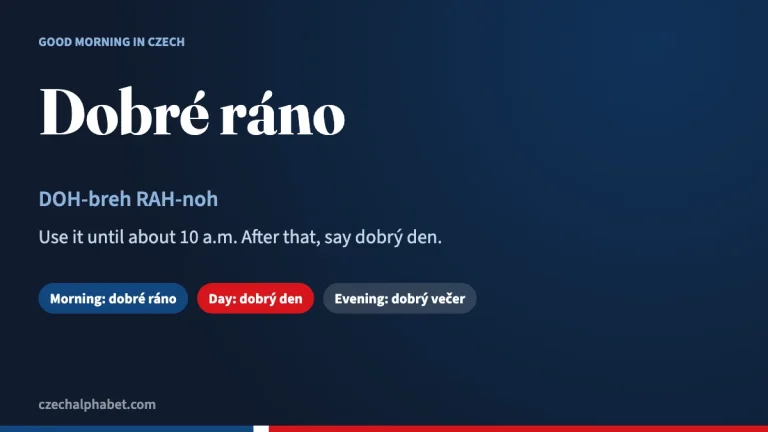
- dobré ráno : good morning. Use it early; Radio Prague’s language series puts the cut-off at about 10 a.m., after which dobrý den takes over.
- dobrý den : good day. From mid-morning until evening, and the default when in doubt.
- dobrý večer : good evening. From roughly dusk, or once you would say “good evening” in English.
- dobrou noc : good night. A farewell only, said when you leave late or go to bed. Never use it to greet someone.
Notice the endings change: dobrý den, dobré ráno, dobrou noc. That is Czech grammar matching the adjective to the noun’s gender and case, so learn each greeting as a fixed phrase rather than building it.
Informal greetings Czechs actually use
- ahoj : the everyday “hi” and “bye”. The Czech Language Institute’s Barbora Martinkovičová told ČT24 it came into Czech from English “ahoy”, blending with the older Czech calls hoj and hej.
- čau : casual, borrowed from Italian ciao. Very common among younger people, also as goodbye.
- čus : even more relaxed, a bit jokey; fine with friends.
- nazdar : friendly and slightly old-fashioned. It goes back to the 1851 collection boxes for building the National Theatre in Prague, labelled Na zdar Národního divadla (“to the success of the National Theatre”), and was later taken up by the Sokol movement.
- zdravím : literally “I greet (you)”. Halfway between formal and casual; common in emails, shops with regulars, and among colleagues.
What people will say back, and how to answer
Learners often freeze on the second line, not the first. These are the replies you are most likely to hear.
| You hear | Meaning | You answer |
|---|---|---|
| Dobrý den, co si dáte? | Hello, what will you have? | Dobrý den, jedno pivo, prosím. |
| Jak se máte? | How are you? (formal) | Dobře, děkuji. A vy? |
| Jak se máš? | How are you? (informal) | Dobře, a ty? |
| Můžu vám pomoct? | Can I help you? | Jen se dívám, děkuji. (Just looking, thanks.) |
Saying goodbye
Formal goodbye is na shledanou (NAH-skhleh-dah-noh-oo, often clipped to “nashle”). Informal goodbye is the same word you said hello with: ahoj, čau or čus. In shops, say na shledanou as you leave even if you bought nothing; it is part of the ritual.
Emails and letters
- Neutral email: Dobrý den, on its own line, then the message. Sign off with S pozdravem (Kind regards).
- Formal letter: Vážená paní Nováková / Vážený pane Nováku (Dear Mrs Nováková / Dear Mr Novák). Note the surname changes form after pane.
- Friendly email: Ahoj Petře, (the name takes the vocative ending).
Five mistakes that mark you as a beginner
- Ahoj to a shop assistant. It is not rude in a dramatic way, but it sounds like you are treating them as a child or a friend.
- Short y in dobrý. The ý is a long “ee”: DOH-bree, not DOH-bri.
- Dobrou noc as a greeting. Arriving at 10 p.m., say dobrý večer; dobrou noc is for leaving.
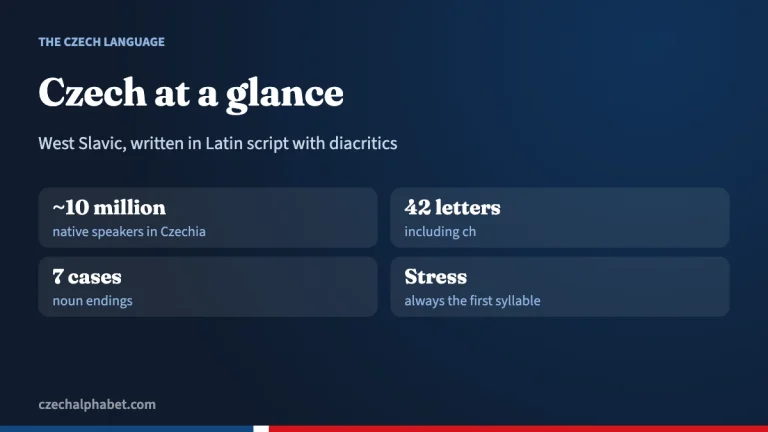
- Stressing the second syllable. Czech stress always falls on the first syllable: DOB-rý den.
- Dropping the accents in writing. “Dobry den” is understood but looks careless in emails. See how to type Czech characters.
Frequently asked questions
Is ahoj formal or informal?
Informal. Use it with people you are on first-name terms with, and with children.
Does ahoj mean hello or goodbye?
Both, like Italian ciao. Context tells you which.
How do you say hi in Czech?
Ahoj or čau. For a casual hello to a group, Czechs often say ahoj všichni (hi, everyone).
What do Czechs say when they answer the phone?
Usually haló, or prosím, which in this context means “yes, I’m listening”.
Is “dobrý den” used in the evening?
Many people keep saying dobrý den into the evening, so it is never wrong. Dobrý večer simply sounds more natural after dark.
Keep going
- Good morning in Czech and good night in Czech
- Thank you in Czech: děkuji, děkuju and díky
- How are you in Czech
- Czech pronunciation guide
Sources
- ČT24, “Čest práci, servus nebo ahoj” (interview with Barbora Martinkovičová, Czech Language Institute), 21 Nov 2017: ct24.ceskatelevize.cz
- Radio Prague International, on the origin of nazdar and the National Theatre collection: english.radio.cz
- Radio Prague International, Czech greetings by time of day: english.radio.cz
- Radio Prague International, prosím on the phone and in replies: english.radio.cz