Yes in Czech: Ano, Jo and Why No Means Yes
| Czech | Meaning | Register | Hear |
|---|---|---|---|
| ano | yes | neutral, formal | |
| jo | yeah | casual | |
| no | yeah (not no!) | casual speech | |
| ne | no | neutral |
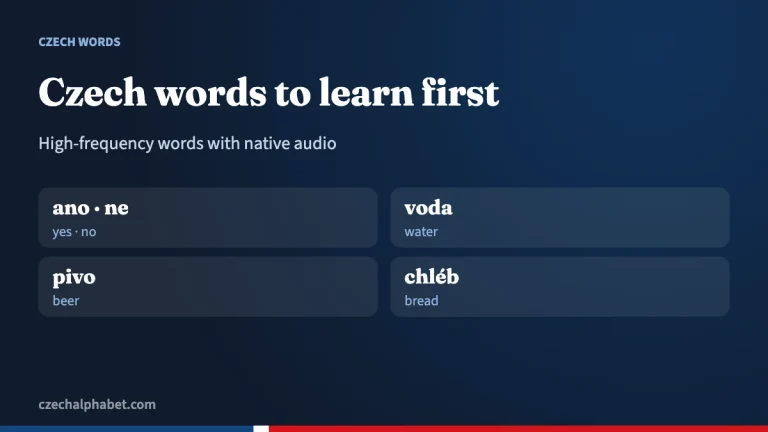
Yes in Czech is ano, pronounced AH-noh [ˈano]. In casual speech Czechs usually say jo (yeah), and they also use no, a short form of ano that means “yeah”, not “no”. The Czech word for no is ne. Ano is correct in every situation, formal or informal.
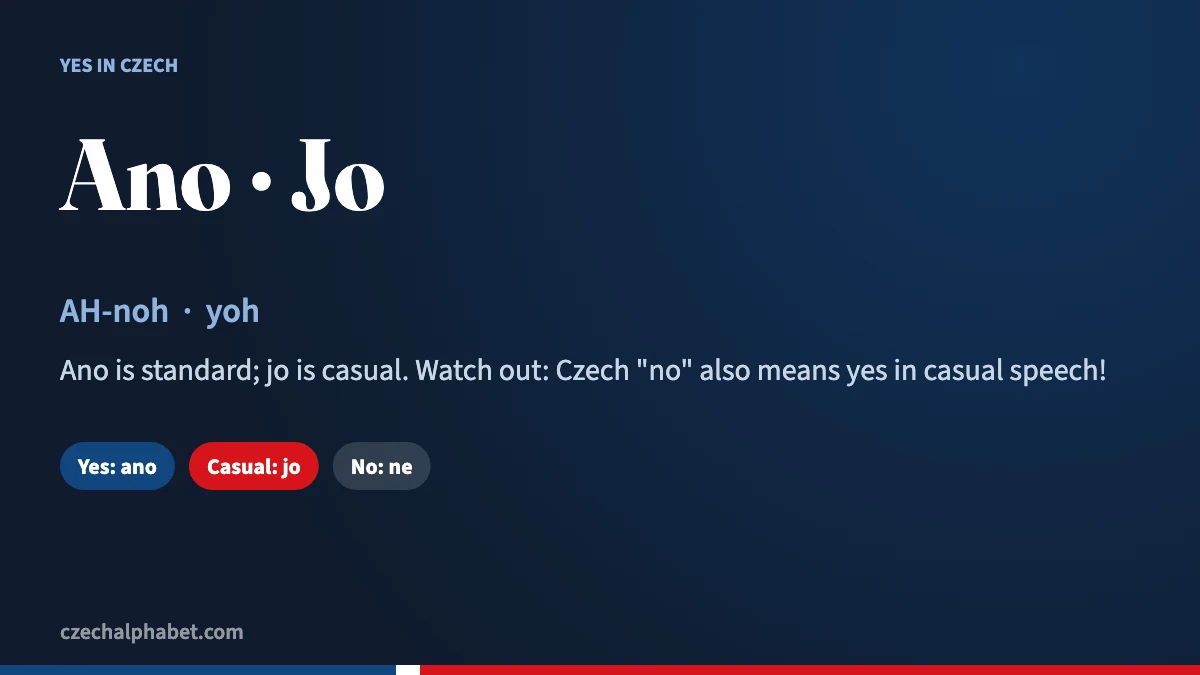
“Yes” in Czech is ano [ˈano], said AH-noh. In casual speech Czechs mostly say jo (yeah), and you will also hear no, which in Czech means “yeah”, not “no”. The Czech word for “no” is ne [nɛ]. That small overlap confuses almost every English speaker who visits, so this page explains how yes and no really work in Czech conversation.
How to say yes in Czech
| Czech | IPA | English | Hear |
|---|---|---|---|
| ano | [ˈano] | yes | |
| jo | [jo] | yeah | |
| no | [no] | yeah, well | |
| jasně | [ˈjasɲɛ] | sure, of course | |
| určitě | [ˈurt͡ʃɪcɛ] | definitely | |
| samozřejmě | [ˈsamozr̝ɛjmɲɛ] | of course | |
| přesně | [ˈpr̝̊ɛsɲɛ] | exactly | |
| rozhodně | [ˈrozɦodɲɛ] | absolutely |
Ano is correct everywhere: with officials, at work, in writing, and at the altar, where the answer to the wedding question is a plain ano. Stress the first syllable and keep both vowels short: AH-noh.
Jo sounds like English “yo”. It is relaxed but not rude, and most Czechs use it far more than ano with friends and family. You can stretch it into jojo (yeah yeah) or soften it into no jo (oh, right; well, yes).
Several words in the table contain a háček or an ě. In jasně, the ně is pronounced “nye”, the same soft n as in Spanish “señor”. See the Czech letter Ň for that sound and how to pronounce the Czech ř for přesně and samozřejmě.
Why no means yes in Czech
Czech no is a shortened form of ano, much as “yeah” comes from “yes”. As Radio Prague International explains, native speakers use it all the time in everyday talk, though some traditionalists find it sloppy. A Czech on the phone may say “No… no… dobře… no“, which means “Yeah… yeah… okay… yeah”.
No also works as a filler, like “well” in English, at the start of a sentence: No, nevím means “Well, I don’t know”. Context and tone tell you which one it is, but it is never the English “no”.
If a Czech says “no” and nods, they agree with you. If they mean no, they will say ne, often doubled as ne, ne.
How to say no in Czech
| Czech | English | Hear |
|---|---|---|
| ne | no | |
| nee | nooo (drawn out, casual) | |
| ne, děkuji | no, thank you | |
| vůbec ne | not at all | |
| určitě ne | definitely not | |
| ani náhodou | no way, not a chance | |
| asi ne | probably not |
Ne rhymes with “meh” with a short vowel. The same ne- also attaches to verbs to make them negative: mám (I have) becomes nemám (I don’t have). For polite refusals, ne, děkuji is the one to remember; more on that in thank you in Czech.
Yes and no to negative questions
Czech uses double negatives as normal grammar. Nikdo nic neví is literally “nobody doesn’t know nothing”, but it simply means “nobody knows anything”. That affects how you answer questions asked in the negative.
- Nemáš hlad? “Aren’t you hungry?” Answer ne to mean “No, I’m not hungry”.
- To contradict a negative question, Czechs use ale ano or ale jo: “Oh yes, I am”.
- Answering with the verb is common and avoids confusion: Mám (I am, literally “I have”) or Nemám (I’m not).
Short answers that repeat the verb are very Czech. Asked Máš čas? (Do you have time?), people often answer Mám or Nemám instead of yes or no.
Maybe and in-between answers
| Czech | English | Hear |
|---|---|---|
| možná | maybe | |
| asi | probably, I guess | |
| asi jo | I think so | |
| nevím | I don’t know | |
| uvidíme | we’ll see | |
| to záleží | it depends |
Asi is one of the most useful words in the language. On its own it means “probably”, and it softens almost any answer. Asi jo (probably yes) and asi ne (probably not) let you commit without promising. For more everyday words, see common Czech words.
Yes in Czech at the shop and restaurant
Most yes-or-no moments for visitors happen at a counter or a table. These short exchanges come up constantly:
| Question | Answer | Hear |
|---|---|---|
| Ještě něco? (Anything else?) | Ne, to je všechno. (No, that’s all.) | |
| Platíte kartou? (Paying by card?) | Ano, kartou. (Yes, by card.) | |
| Dáte si kávu? (Will you have coffee?) | Ano, rád. / Ano, ráda. (Yes, gladly.) | |
| Chcete tašku? (Do you want a bag?) | Ne, děkuji. (No, thank you.) |
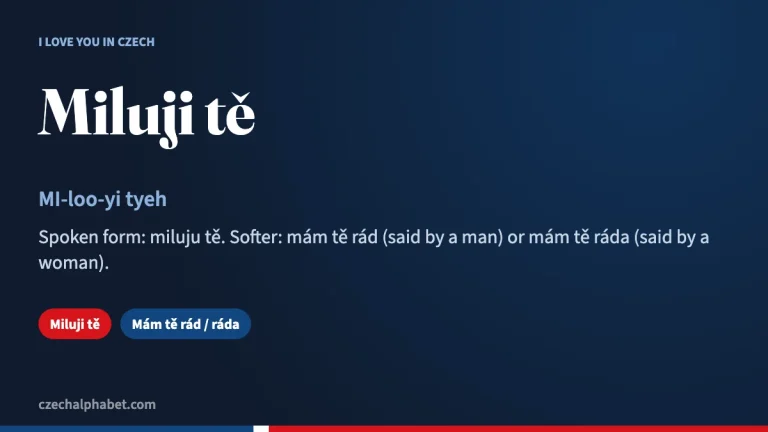
Rád (said by a man) and ráda (said by a woman) mean “gladly” and make a yes sound warmer. The ending changes with the speaker’s gender, a pattern you will meet again in I love you in Czech.
Body language
Czechs nod for yes and shake their heads for no, as English speakers do, so there are no gesture traps here. The confusion comes only from the word no. When a Czech mixes no with a nod, read it as agreement. On the phone or in a long story, listeners also murmur no, jo or jasně every few seconds. That shows they are following you, not necessarily that they agree with every word.
Common mistakes
- Hearing no as a refusal. Czech no means “yeah” or “well”. The Czech “no” is ne.
- Saying “ah-NO”. Stress the first syllable: AH-noh.
- Using jo in a job interview. It is not rude, but ano sounds more professional.
- Answering a negative question with ano. To insist “yes, I do”, say ale ano or repeat the verb.
- Typing “jasne” or “urcite”. Keep the háčeks; our háček guide shows why they matter. More conversation basics are on our Czech phrases page.
Frequently asked questions
How do you say yes in Czech?
Say ano (AH-noh). Casually, jo (yeah).
Does no mean yes in Czech?
Yes. Czech no is a short form of ano and means “yeah”. It can also mean “well” at the start of a sentence.
How do you say no in Czech?
Ne. For a polite refusal, say ne, děkuji (no, thank you).
Is jo rude in Czech?
No. It is casual, like “yeah”. In formal situations, ano is better.
How do you say maybe in Czech?
Možná. Asi means “probably”.
Sources
- Radio Prague International: No for yes
- Radio Prague International: Love and marriage, Czech style (ano at a proposal)
- Wikipedia: Czech language (grammar, negation)