Goodbye in Czech: Na Shledanou, Ahoj, Čau and Sbohem
| Czech | Meaning | Use it with | Hear |
|---|---|---|---|
| na shledanou | goodbye | anyone; the polite default | |
| nashle | bye | casual, shops, people you know | |
| ahoj | bye | friends, family | |
| čau | bye | friends | |
| sbohem | farewell | rare, final or old-fashioned |
Goodbye in Czech is na shledanou, pronounced roughly NAHS-khleh-dah-noh [ˈnasxlɛdanou̯], meaning “until we meet again”. It is the polite farewell for shops, offices and strangers. With friends, say ahoj or čau, which also mean hello. Sbohem (“with God”) sounds final and old-fashioned.

“Goodbye” in Czech is na shledanou [ˈnasxlɛdanou̯], said roughly NAHS-khleh-dah-noh. It literally means “until we see each other again” and is the polite way to leave a shop, an office, or anyone you address formally. With friends, Czechs simply say ahoj or čau, the same words they use for hello. The old sbohem exists, but it sounds final and is rarely the right choice.
Formal goodbye in Czech: na shledanou
Na shledanou is the standard farewell. You say it when leaving a shop, a doctor’s office, a hotel, or a meeting, and the staff say it back. Even in a busy supermarket, a quick na shledanou to the cashier is normal.
The spelling hides a tricky cluster. The letters sh are not the English “sh” sound. They are an s followed by h, and in Bohemia, including Prague, the pair is usually pronounced “skh”: NAHS-khleh-dah-noh. In Moravia you will often hear a voiced version closer to “z-h”. Both are correct; listen and copy the people around you. Stress falls on na, because Czech treats a short preposition and its noun as one word for stress.
The ending ou is a diphthong, like “oh”. The e and a are short and clear.
Nashle and other short forms
Nashle is a clipped, casual form of na shledanou. Radio Prague International describes it as informal and a little less polite, so it fits a corner shop you visit daily or a colleague, rather than a formal meeting. You may also hear nashledanou run together, or even na shle.
Informal goodbye in Czech: ahoj, čau and more
| Czech | IPA | English | Hear |
|---|---|---|---|
| ahoj | [ˈaɦoj] | bye (and hi) | |
| čau | [t͡ʃau̯] | bye (and hi) | |
| měj se | [mɲɛj sɛ] | take care (to one friend) | |
| mějte se | [ˈmɲɛjtɛ sɛ] | take care (formal or plural) | |
| zatím | [ˈzaciːm] | see you, for now | |
| uvidíme se | [ˈuvɪɟiːmɛ sɛ] | see you | |
| pa pa | [pa pa] | bye-bye (to children, loved ones) |
Ahoj and čau work for both arriving and leaving, so you only need to learn them once. Čau comes from Italian ciao, which has the same double use. Our page on hello in Czech explains where each one fits.
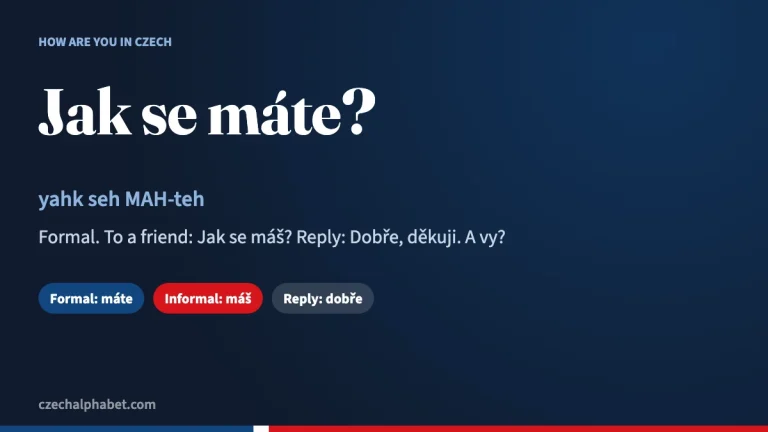
Měj se and mějte se come from mít se, the verb behind “How are you?” (Jak se máš?). They work like “take care” or “have a good one”. Note the first sound: mě is pronounced “mnye”, with a soft n between the m and the e. Our page on the Czech letter Ě explains why.
Zatím means “for now” and is a very common casual goodbye among friends: Tak zatím! (tak means “so” or “well”). Pa or pa pa began as baby talk and is used with children and between partners.
Sbohem: the goodbye you rarely need
Sbohem comes from s Bohem, “with God”, much like English “goodbye” (God be with you) or French adieu. According to Radio Prague International, it is used mainly by the older generation and in the countryside.
For many Czechs, sbohem also carries a sense of parting for good: the end of a relationship, a dramatic exit in a film, or a last farewell. Saying it to a shop assistant would sound odd, so stick with na shledanou.
Rule of thumb: na shledanou when you would say “goodbye”, ahoj or čau when you would say “bye”, and sbohem only when you mean “farewell forever”.
Media goodbyes and wordplay
Czech has neat variants built on the same pattern. Shledat se means “to meet again”, so:
- na viděnou: “until we see each other”, used by TV presenters.
- na slyšenou: “until we hear each other”, used on the radio and sometimes at the end of phone calls.
- na shledanou nazdárek: a cheerful mix of formal and informal that Radio Prague heard from vendors at Brno’s Zelný trh market.
Goodbye in Czech: formal and informal pairs
Czech splits “you” into formal vy and informal ty, and farewells follow the same split. A quick way to remember them is in pairs:
- na shledanou (formal) and ahoj (informal) for the basic goodbye.
- mějte se (formal or plural) and měj se (one friend) for “take care”.
- vyřiďte pozdrav (formal) and pozdravuj (informal) for “say hello to them for me”.
If a group mixes friends and strangers, it is fine to use both: na shledanou, ahoj.
Goodbye phrases for specific situations
| Czech | English | Hear |
|---|---|---|
| Uvidíme se zítra. | See you tomorrow. | |
| Uvidíme se v pondělí. | See you on Monday. | |
| Hezký den! | Have a nice day! | |
| Hezký víkend! | Have a nice weekend! | |
| Šťastnou cestu! | Have a good trip! | |
| Dobrou noc. | Good night (when leaving late). |
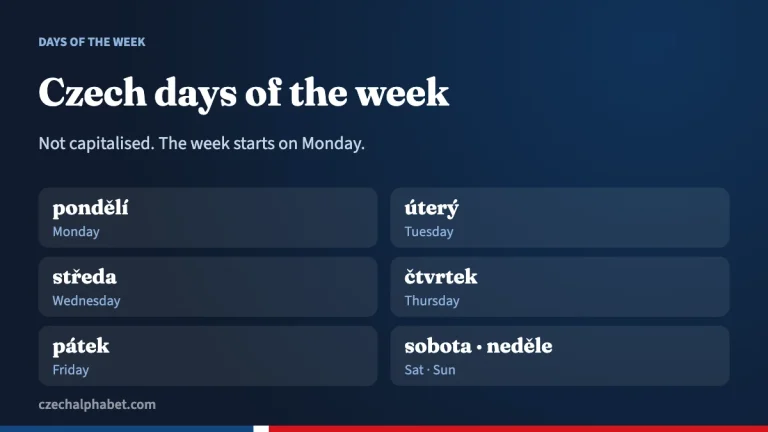
Shop assistants increasingly say hezký den (have a nice day) as you leave. Radio Prague notes that some purists see it as an Americanism, but it is now everyday Czech. For days of the week, see Czech days of the week; for late evenings, good night in Czech.
Common mistakes
- Reading “sh” as in “shoe”. In na shledanou it is s + h: NAHS-khleh-dah-noh.
- Using sbohem casually. It sounds final or old-fashioned. Use na shledanou.
- Saying ahoj to strangers. With shop staff and older people, use na shledanou.
- Stressing “le”. The stress falls on na, the first syllable of the group.
- Forgetting to say goodbye at all. Leaving a small shop without na shledanou can feel abrupt to Czechs. More polite basics are in Czech phrases.
Frequently asked questions
How do you say goodbye in Czech?
Say na shledanou in polite situations and ahoj or čau with friends.
How do you pronounce na shledanou?
Roughly NAHS-khleh-dah-noh. The sh is s followed by h, not the English “sh” sound.
What does sbohem mean?
It means “with God” and works like “farewell” or adieu. Today it is old-fashioned and can sound like a goodbye forever.
Is nashle rude?
No, but it is casual. Use it with people you know; say the full na shledanou in formal settings.
How do you say see you tomorrow in Czech?
Uvidíme se zítra.
Sources
- Radio Prague International: Czech goodbyes (na shledanou, sbohem, mějte se)
- Radio Prague International: G for greetings
- Wiktionary: sbohem