Czech I, Í, Y and Ý: Same Sound, Different Spelling (and Why)
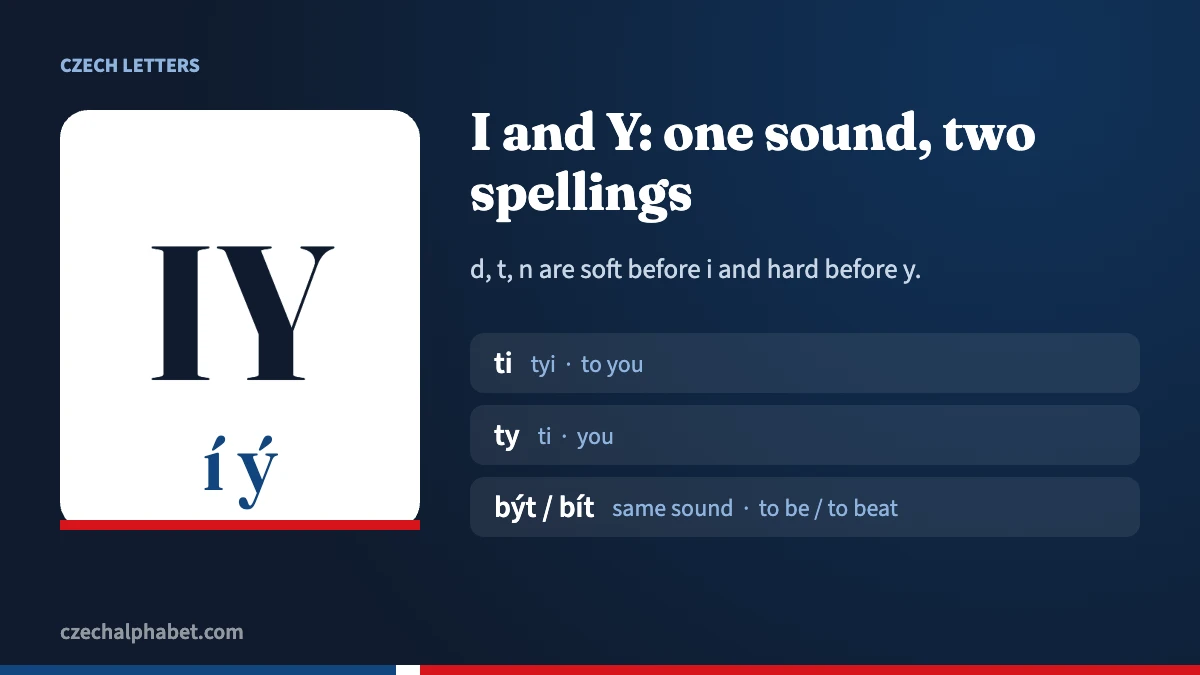
In Czech, I and Y sound the same: short like the i in “sit”. Í and Ý are the same sound held long, like the ee in “see”. The difference is spelling, plus one real pronunciation effect: d, t, n are soft before i/í but hard before y/ý, so ti sounds like “tyi” and ty like “ti”.
Four letters, two sounds
| Letters | Sound | Examples |
|---|---|---|
| i, y | short, as in “sit” | pivo beer, syn son |
| í, ý | long, as in “see” | bílý white, sýr cheese |
Czechs call them měkké i (“soft i”) and tvrdé y (“hard y”). The names describe what happens to the consonant before them, not the vowel itself.
Where it changes the sound: di/dy, ti/ty, ni/ny
| Soft (i) | Hard (y) |
|---|---|
| ti to you: “tyi” | ty you: “ti” |
| dítě child: “dyee-tye” | dýně pumpkin: “dee-nye” |
| nic nothing: “nyits” | nyní now: “NI-nyee” (hard n, then soft) |
After all other consonants, i and y are pronounced identically. See Ď, Ť and Ň for the soft sounds.
The spelling rule, simplified
- After hard consonants (h, ch, k, r, d, t, n) write y: chyba mistake, kyselý sour, ryba fish.
- After soft consonants (ž, š, č, ř, c, j, ď, ť, ň) write i: žít to live, čistý clean, řídit to drive.
- After b, f, l, m, p, s, v, z it depends on the word. Czech pupils memorise lists called vyjmenovaná slova (“listed words”), for example být to be, myš mouse, pytel sack, syn son, vysoký tall, jazyk tongue, which take y.
Pairs like být (to be) and bít (to beat), or byt (flat) and bit (beaten), sound exactly the same. Only spelling separates them.
Past-tense endings: a common spelling trap
Past-tense verbs agree with the subject in writing, and the ending sounds the same either way: psi štěkali (the dogs barked) but kočky mňoukaly (the cats meowed). Czechs learn this as grammar, not pronunciation, so as a learner you can ignore it when speaking.
Practice words
Typing Í and Ý
- Czech keyboard: í is the 9 key, ý the 7 key.
- Windows (any layout): Alt + 0237 (í), Alt + 0253 (ý).
- Mac / phone: hold i or y.
Frequently asked questions
Do i and y sound different in Czech?
No, except that d, t, n before them change: soft before i, hard before y.
Why does Czech have both i and y?
Historically they were different vowels. They merged in pronunciation centuries ago, but spelling kept the distinction, and it still marks hard and soft consonants.
How do you pronounce ý?
Like the ee in “see”, held long. It sounds the same as í.
Keep going
- Czech vowels
- Czech spelling rules
- Ď, Ť and Ň
Sources
- Wikipedia, “Czech orthography” (i/y and hard/soft consonants): en.wikipedia.org
- Wikipedia, “Czech phonology”: en.wikipedia.org